




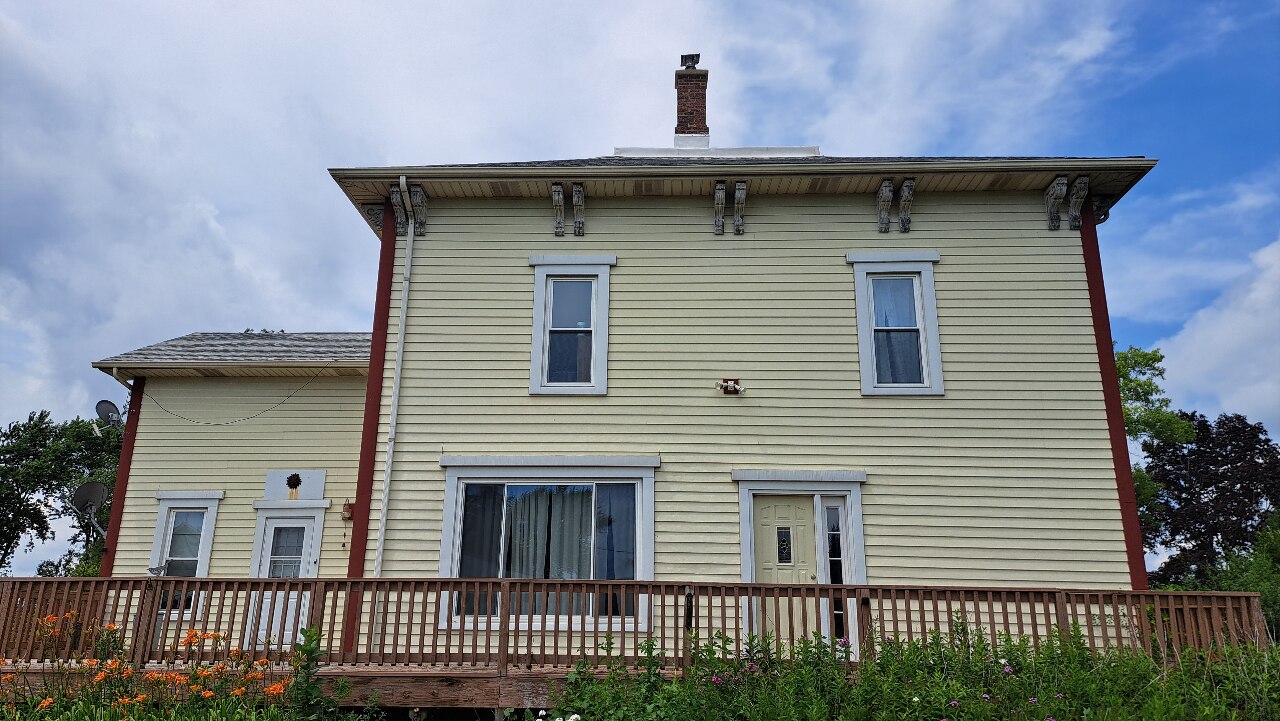
St. Charles History Museum helps add the Joseph P. Bartlett Farm to the National Underground Railroad Network to Freedom
Eric Krupa, Collections Manager, St. Charles History Museum 1/22/2026 1:00PM
The St. Charles History Museum has announced that the Joseph P. Bartlett Farm in Campton Township has been officially accepted as the first verified Underground Railroad safehouse in Kane County.
This designation is part of a broader effort to identify and nominate additional historic Underground Railroad sites across Northern Illinois. 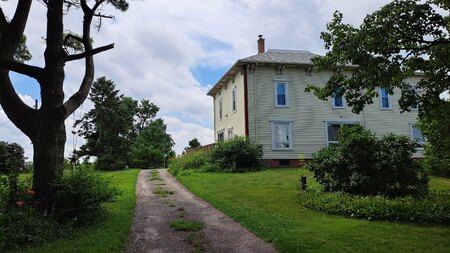
The National Underground Railroad Network to Freedom is a program administered by the National Park Service that recognizes and verifies sites connected to Freedom Seekers across the United States.
Inclusion in the Network requires a detailed application and a rigorous peer-review process, along with the consent of property owners.
The St. Charles History Museum extends its sincere thanks to the Bartlett Farm’s property owners for their generosity and cooperation in preserving this important history.
Located in western Kane County near the communities of Campton Hills and Maple Park, the Bartlett Farm becomes the first verified safehouse and only the second Kane County site recognized by the Network to Freedom. The county’s other designated site, Newsome Park in Elgin, was added in 2016 and commemorates the story of the “1862 Contraband Train” and the early history of Black settlement in Elgin.
Joseph Bartlett originally came from New Hampshire, where he was a well-educated teacher and hard-working farmer. After moving to Kane County in 1843, he purchased farmland, married, and raised a family. The Bartlett family were well respected in the community, and Joseph held several positions in local government. After Illinois reorganized into townships, in 1850, Joseph even selected the new name of “Campton Township.” This is a name which has stuck, ever since.
It was around this same time, when the Bartlett family began to operate their farm as a safehouse on the UGRR. It is believed that they opened their home to dozens of Freedom Seekers, bringing them onto the many safehouses along the “junction” in St. Charles. In fact, the Bartlett Farm was discovered to be one of the missing links in the dramatic escape of two Freedom Seekers known as “Eliza” and Celia Grayson.
A regional effort is now underway–spearheaded by Eric Krupa of the St. Charles History Museum and many others–to nominate additional Underground Railroad sites for America 250.
This work, in itself, is part of an even larger effort to document and share the history of Freedom Seeking in Illinois.
For more information on those efforts, contact: Eric Krupa at ILNTFC@gmail.com, or visit https://ilntfc.my.canva.site. For information on the St. Charles History Museum, contact: collections@stcmuseum.org, or visit, stcmuseum.org.
Personal History/ Interest in Underground Railroad. AKA: “Interview” with Eric Krupa
My personal interest in the subject dates back in the early ‘aughts–around the turn of the new millennium–when I first consciously remember hearing about the Underground Railroad. My grandmother was invested in the Civil Rights movement in the 1960s.
As such, she wished I be: well educated, able to learn lessons from the past, and able to use those lessons to promote empathy. History was an often talked about subject, and I reveled in hearing the first hand stories of the: Great Depression, Second World War, and the Civil Rights Era–alongside others across from both sides of the family.
I was absorbing this information around the same time when Glennette Tilley Turner published her groundbreaking book, The Underground Railroad in Illinois. This book created massive interest in the subject matter, as it worked its way through classrooms across Illinois.
As a student in the Fox River Valley, I distinctly remember my third grade teacher, “Mrs. L,” educating us on the Underground Railroad. This was my first real lesson in what Freedom Seeking was, and how history can be perceived in many ways. One day, “Mrs. L” mentioned that she had seen the Wheeler House in St. Charles referred to, “as an Underground Railroad Station,” in Glennette’s book. To have a site in my proverbial backyard–which connected directly to the good in humanity– had fired me up at a young age.
This exciting news had me checking out books on Frederick Douglass and Harriet Tubman, while I discovered the heroism of everyday people who cared for what was right.
Even as a kid, I wondered why our region was not discussed more, and what it would take to authenticate the many rumored sites around town.
Through the ups and downs of life, I never let go of that curiosity and became lucky enough to serve as Archivist and Curator at the St. Charles History Museum. This is right in the heart of the Fox River Valley, my home, where my interest in history was first cultivated.
I have the honor of working alongside both Mrs. Tilley Turner, “Mrs. L,” and many of the brightest minds, in Illinois to uncover this history. It is one of those serendipitous “full circle” moments, which is hard to explain.
-Eric Krupa