




Hunger Action Month Highlights Kane County's Efforts to Improve Food Access
September is Hunger Action Month, a time to raise awareness about food insecurity and connect individuals and families with resources that can help put nutritious food on the table.
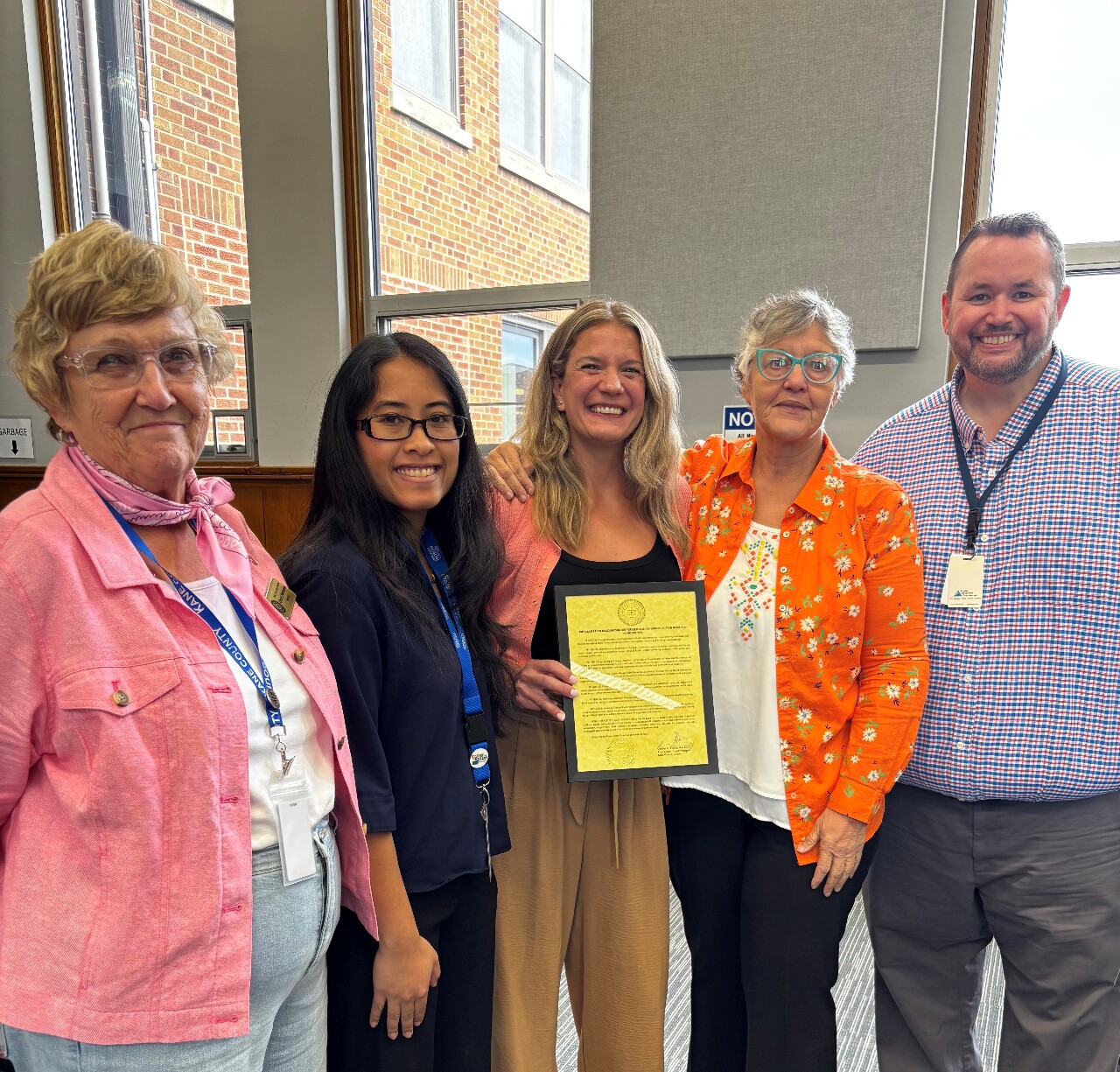
The Kane County Board, during its September meeting, approved a proclamation declaring Hunger Action Month in Kane County.
Work to reduce hunger insecurity is supported by the Kane County Hunger Relief Network, a collaborative partnership convened by the Kane County Health Department and University of Illinois Extension. Established in 2018, the network brings together food pantries, hunger relief organizations and community partners to share resources, identify solutions and strengthen food access efforts throughout Kane County.
“Food insecurity is about more than having enough food. It's also about making sure people can find and access nutritious food and the other resources they need," said Christine Birns, Food and Health Systems Educator with the University of Illinois Extension. “The partnerships we've built through the Hunger Relief Network allow us to work together, share ideas and connect residents with support in their own communities."
Through its work, the network is helping expand the role of food pantries, which are increasingly becoming places where residents can connect with a variety of resources. In addition to food, some pantries offer services such as energy assistance, health screenings and career-readiness programs.
Access to fresh produce is another important focus. Birns said local farmers and community gardens have helped pantries provide more fresh fruits and vegetables. Several pantry gardens have been established with assistance from the University of Illinois Extension Master Gardener program.
These gardens require ongoing volunteer support and coordination to remain productive. Birns works with community partners to help sustain the gardens and ensure they can continue providing fresh produce to neighbors.
Residents seeking food assistance can use the Find Food IL Map, an online resource that helps people locate nearby food pantries, meal programs and other food resources throughout Illinois.
The map also includes information about WIC (Special Supplemental Nutrition Program for Women, Infants, and Children) and Illinois Department of Human Services (DHS) offices, as well as free and reduced-price school meal programs, summer meal sites and resources for older adults. It also includes community food resources that may not be affiliated with a traditional food bank, including church-based food pantries.
University of Illinois Extension is also piloting the Find Food Illinois Navigators program, which takes a more personalized approach by helping people identify and connect with resources that fit their individual needs.
According to Feeding America, 11.1% of Kane County residents and 10.5% of children experienced food insecurity in 2023. In addition, 37.1% of Kane County households were below the ALICE (Asset Limited, Income Constrained, Employed) threshold, meaning many working households continue to face challenges meeting basic needs, including food.
Residents and organizations interested in learning more or getting involved with the network can contact the Kane County Health Department through its website.
Find food assistance near you: Find Food IL