




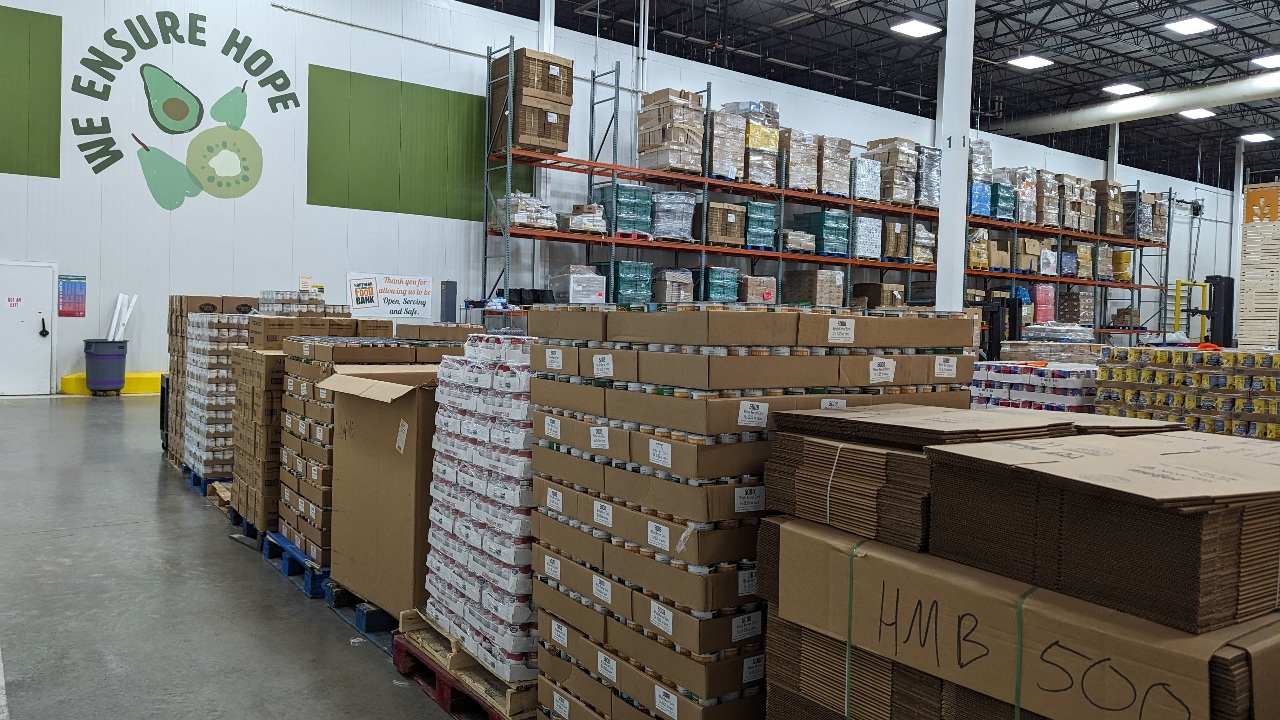
Food for Thought Kane County - The Impact of a Dollar
Even in a community known for opportunity, hunger affects an estimated 64,000 Kane County residents at any given time. Throughout July, Kane County Connects is spotlighting the work of the Northern Illinois Food Bank, exploring how it partners with local organizations, volunteers and community groups to fight hunger and expand access to food across Kane County.
For Northern Illinois Food Bank Chief Impact Officer Jen Lamplough, the path to fighting hunger began in an unexpected place: a classroom.
While teaching Culinary Arts, Lamplough noticed one student who seemed disengaged and uninterested in the coursework. When she asked why he had enrolled, his answer changed her perspective forever.
"He told me, 'I knew I would eat.'"
That simple response opened her eyes to the reality of food insecurity.
"I started seeing more and more students who were struggling with food insecurity," she said. "Food is culture, food is health, food is family, and food is a human right. I decided I wanted to make a difference."
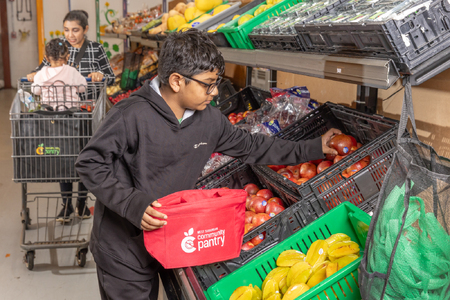
Today, Lamplough helps lead one of the largest hunger-relief organizations in Illinois, serving 13 counties. The Northern Illinois Food Bank distributes more than 100 million pounds of food each year through a combination of donated food, purchased food, and government-supported programs.
About 63 million meals annually come from food donated by manufacturers, retailers, and other partners. The remainder is purchased using financial donations.
In 2025, 78,000 people were served 12 million meals in Kane County alone.
"There is tremendous power in giving financially," Lamplough said. "For every dollar we receive, the Northern Illinois Food Bank can purchase seven dollars' worth of food."
Those donations come from many sources, including something as simple as a birthday fundraiser, an estate gift, corporate contributions, repeat individual donors and planned fundraising events.
"The donations purchase healthy foods, culturally affirming foods, and food for people with chronic diseases, or simply the foods people need."
A dedicated food procurement team works year-round with retailers, food manufacturers, farms, and other partners to secure donations and purchase food at the best possible value.
"The more we're able to buy, the further every donated dollar goes," she said.
Like every household, however, the Northern Illinois Food Bank has felt the impact of rising food and transportation costs. Inflation has reduced its purchasing power from roughly eight dollars' worth of food per donated dollar to about seven dollars today.
At the same time, reductions in SNAP benefits are increasing demand at food pantries.
"I think it's important for people to understand what SNAP does for food insecurity," Lamplough said. "It's the most effective and efficient hunger-relief program we have. For every one meal the Northern Illinois Food Bank can provide, SNAP provides nine."
As SNAP benefits are reduced, she expects more families will turn to food pantries or visit them more often to make ends meet.
"That means the Northern Illinois Food Bank will need even more support to keep up with the growing demand."
The organization is committed to making every donation count. Approximately 96 percent of every donated dollar goes directly toward programs and services that provide food to neighbors in need.
Donations are the lifeblood of the Northern Illinois Food Bank. "Whether it's a financial gift, a food donation, or giving your time as a volunteer, every contribution makes a difference," according to Lamplough.
To learn more about donating, volunteering, or finding ways to help, visit the Northern Illinois Food Bank's website at https://solvehungertoday.org/.
ABOUT NORTHERN ILLINOIS FOOD BANK
For over 40 years, Northern Illinois Food Bank has been dedicated to solving hunger and empowering neighbors. Our vision at Northern Illinois Food Bank is for everyone in Northern Illinois to have the food they need to thrive. A 501(c)(3) nonprofit organization and proud member of Feeding America, we serve our neighbors in 13 counties with dignity, equity and convenience, providing 320,000 meals a day. We bring together manufacturers, local and corporate grocers, area farmers, corporations, foundations, and individuals who donate food and funding, and each week nearly 1,000 volunteers help us evaluate, repack, and distribute food. We also proudly partner with more than 900 food pantries, soup kitchens, shelters, and youth and senior feeding programs to provide nutritious food and resources. Our distribution centers are located in Geneva, Lake Forest, Rockford and Joliet. Find out how you can get help, volunteer, donate or get involved at SolveHungerToday.org, or follow us on Facebook, TikTok, Instagram and LinkedIn.