

Kane County's Energy Audit & Rebate Program
On May 12, 2026, the Kane County Board approved Resolution 26-452, creating the Energy Audit & Rebate Program. Supported by $100,000 allocated from the County's Electric Aggregation Fund, this initiative is designed to assist residents living in unincorporated Kane County in lowering their utility bills and curbing overall energy usage through professional home audits and financial rebates.
What is an Energy Audit?
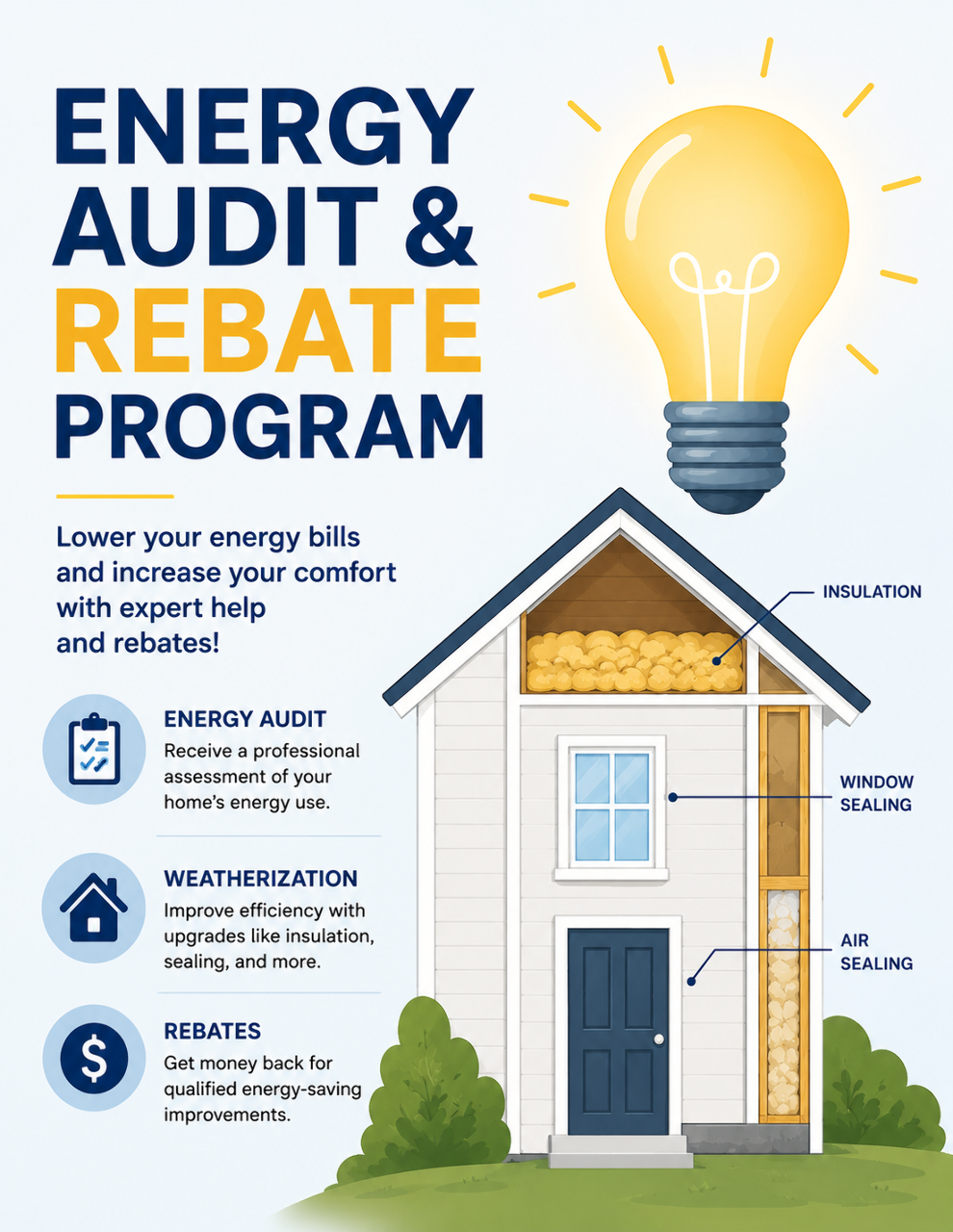
Think of a home energy audit as a comprehensive physical exam for your house. Conducted by a trained professional, an energy audit pinpoints exactly where your home is leaking air, where insulation falls short, and which appliances are consuming excess electricity.
During a professional evaluation, auditors typically use specialized tools:
- Blower Door Tests: A temporary door setup depressurizes your home to measure air tightness and locate hidden air leaks around windows, doors, and floorboards.
- Infrared Thermography: Thermal imaging cameras reveal temperature differences on wall and ceiling surfaces, exposing hidden gaps in insulation.
- Combustion Safety Test: Tests your heating equipment to ensure there are no safety hazards such as venting carbon monoxide, overheating, and proper venting of other gases.
The end result is a prioritized action plan tailored to your home's unique footprint, ranking improvements by safety measures to be taken, cost-effectiveness, and overall energy impact.
Once an audit highlights your home's needs, weatherization puts those insights into practice. Weatherization involves physical modifications designed to protect the interior envelope of the home from outdoor elements. Key weatherization upgrades include caulking, weatherstripping, attic insulation and replacing doors and windows. Combined, a thorough audit and proper weatherization can reduce heating and cooling costs, improve indoor air quality and thermal comfort.
Program Pathways and Rebates
The program targets 30 local households through two distinct participation options tailored to household income levels:
| Pathway | Target Beneficiaries | Maximum Rebate |
| Standard Pathway | 18 households
(Open to all; priority to 80%–100% AMI) | Up to $880 for energy efficiency improvements |
| Low-Income Pathway | 12 households (Income below 80% AMI) | Up to $2,000 for energy efficiency improvements |
Note on Income Eligibility: AMI refers to the Area Median Income. Households falling at or below 80% of the AMI qualify for the higher rebate tier under the Low-Income pathway.
Chicago-Joliet-Naperville, IL HUD Metro FMR Area | | | |
Area Median Income Limits 2026 | | | |
Household Size | 80% (Low Income) | 90% | 100% |
1 | $68,050 | $76,590 | $85,100 |
2 | $77,800 | $87,480 | $97,200 |
3 | $87,500 | $98,460 | $109,400 |
4 | $97,200 | $109,350 | $121,500 |
5 | $105,000 | $118,170 | $131,500 |
6 | $112,800 | $126,900 | $141,000 |
7 | $120,550 | $135,640 | $150,700 |
8 | $128,350 | $144,360 | $160,400 |
The audits are performed by Craig Schneider from Sustained Ability Construction. Mr. Schneider has 20 years' experience in sustainable and efficient construction and most recently has administered the City of Batavia's GREEN Program. He possesses several professional accreditations, including a LEED AP cert and the HERS Rater designation from RESNET.
Application Information
The application period is open from September 1-30th 2026. Applications will be processed based on eligibility criteria and priority tiers. Every applicant will receive an email confirmation detailing whether they have been accepted, denied, or placed on a waitlist.
More details on the program and the application link can be found at Energy Audit and Rebate Program