




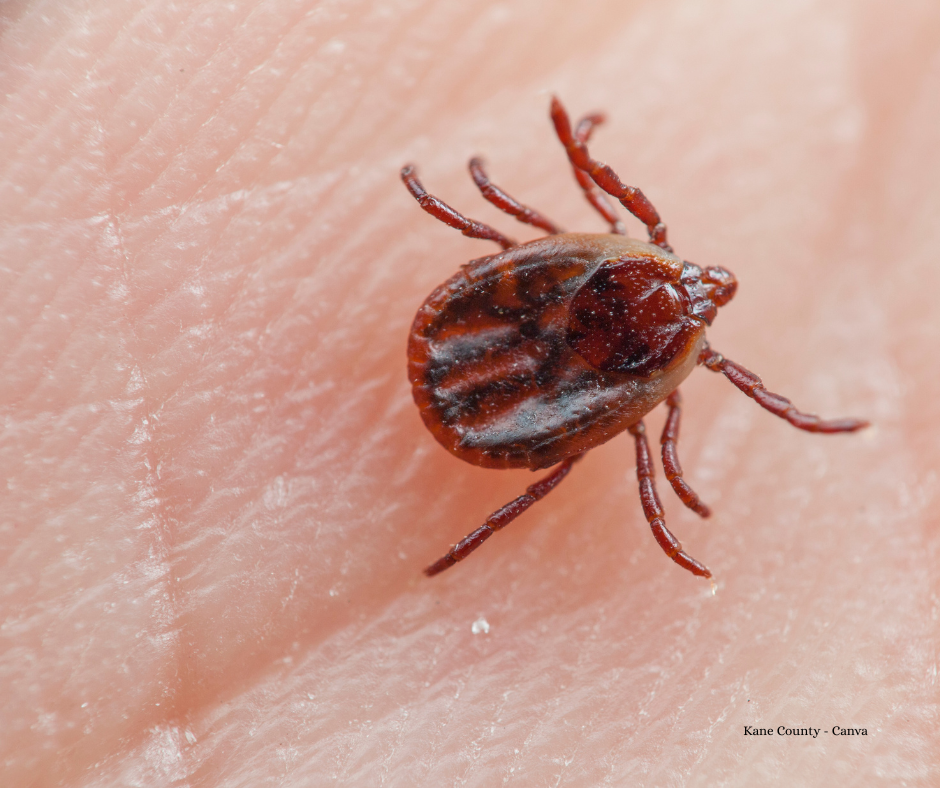
Kane County Health Department Reminds Residents to Take Precautions Against Mosquitos and Ticks this Season, Get Free Tick Kit
Kane County Health Department Media Release 5/20/2026 9:00AM
As warmer weather brings more time outdoors, the Kane County Health Department is reminding residents to protect themselves against mosquitoes and ticks, which can carry diseases
such as West Nile virus and Lyme disease.
Mosquito and tick activity increases during the spring and summer months, making prevention an important part of staying healthy while enjoying outdoor activities.
West Nile virus remains the most common mosquito-borne disease in Illinois and is primarily spread through the bite of an infected Culex mosquito. Most people infected do not develop
symptoms, but some may experience fever, headaches, body aches, or, in rare cases, serious neurological illness.
Illinois continues statewide West Nile virus monitoring through mosquito, bird, and animal surveillance to identify virus activity and help local health departments respond
early.
The Kane County Health Department conducts its annual West Nile virus surveillance program each mosquito season, placing mosquito traps throughout the county to monitor for virus
activity. Mosquitoes collected from these traps are tested for West Nile virus, allowing the department to identify areas of increased risk and inform the public when positive samples are
detected.
“Surveillance helps us stay ahead of mosquito-borne illness and gives our community important information to reduce risk,” said Michael Isaacson, KCHD Executive Director. “Prevention starts
with awareness and simple actions at home and outdoors.”
Residents can reduce their risk of mosquito and tick bites by following these prevention tips:
Fight the bite:
• Use EPA-registered insect repellents containing DEET, picaridin, IR3535, or oil of lemon eucalyptus
• Wear long sleeves, pants, and light-colored clothing when outdoors
• Avoid outdoor activity during peak mosquito hours, especially dawn and dusk
• Check for ticks after spending time in grassy, wooded, or brushy areas
• Shower soon after being outdoors to help wash off unattached ticks
Remove breeding and hiding areas:
• Empty standing water from birdbaths, buckets, flowerpots, and gutters at least weekly
• Keep grass trimmed and remove leaf litter where ticks may hide
• Maintain window and door screens to prevent mosquitoes from entering your home
If you find a tick attached to your skin:
• Remove it promptly by grasping the tick as close to the skin’s surface as possible using clean fine-tipped tweezers.
• Pull tick away from the skin with steady, even pressure.
• Dispose of it by flushing it down the toilet, wrapping it tightly in tape, or putting it in alcohol.
• Thoroughly clean the bite area and your hands with soap and water, rubbing alcohol, or hand sanitizer.
• Do a tick check to look for more ticks on other parts of your body and promptly remove them.
• Watch for symptoms such as rash, fever, or fatigue and contact a healthcare provider if symptoms develop.
The Kane County Health Department invites the community to pick up a tick removal kit from our Aurora office at 1240 N. Highland Ave., Monday through Friday, 8:30am – 4:30pm.
The health department will continue monitoring mosquito activity throughout the season and provide updates if West Nile virus is detected locally. For more information about mosquito and tick prevention, visit:
https://www.kanehealth.com/Pages/Vector-Borne-Disease.aspx